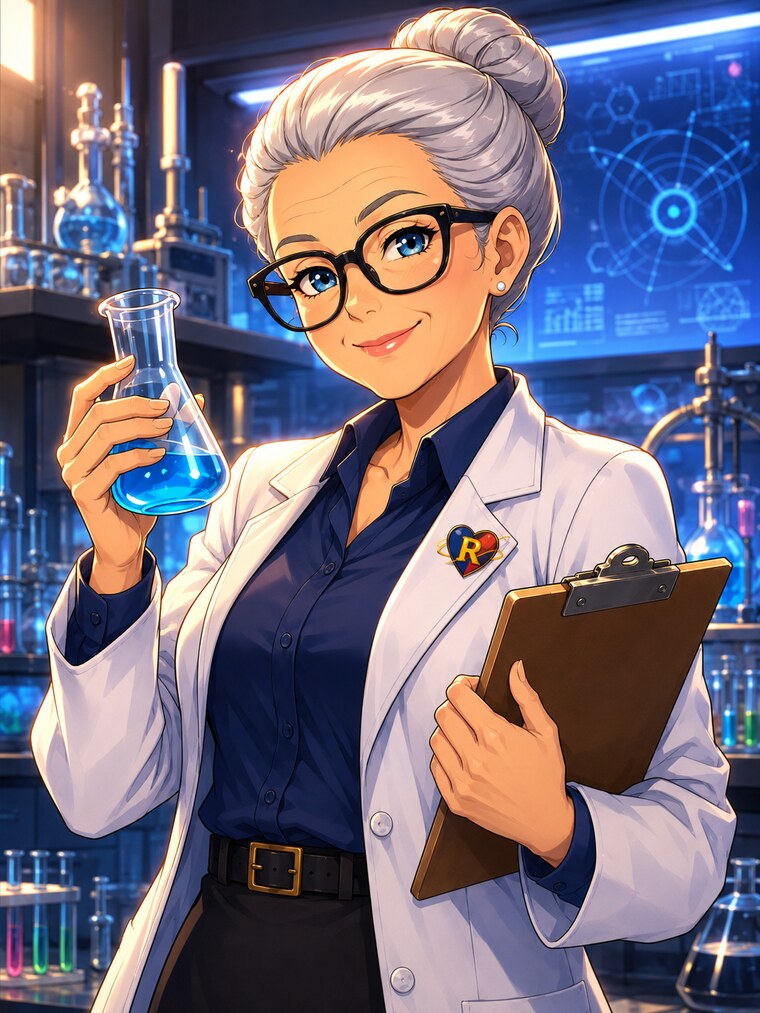
They sat on the hotel balcony in the mild autumn weather, looking at the skeletal spire of the Eiffel Tower through the setting sun. It was early in the season. The leaves hinted at their imminent mortal change. The sunlight played with them, throwing them back and forth like two children playing a game, or the glance that was held and exchanged equally by their eyes. His were large and brown, with an inherent frankness born of direct force and sheathed in acquired manner. Hers were a cloudy gray behind large, thick glasses. The weather whispered their words to them before they could speak them, like an overeager prompter waving his cards backstage.
“I know who you are,” Lance Corporeal said in his clipped British accent. “It’s not every day that one is privileged to sit down and share a drink or two with history’s youngest recipient of the Nobel Prize in biochemistry. Congratulations, I suppose, are in order, Doctor Dendrite.”
“Thank you,” she said, “I’m afraid that you have me at a disadvantage, Mr. - ?”
“Corporeal is the name. Lance Corporeal.”
“And what do you do with yourself, Mr. Corporeal? Your accent suggests an Oxford education. What brings you to Paris at the onset of autumn?”
The large bald man in the elegant suit mused briefly before he responded. “Nothing, Doctor. Literally nothing. I’m running away from an eccentric service record in a series of depressing bush wars in sub-Saharan Africa, I’m afraid. I’m a graduate of Sandhurst as well as of Oxford. I seem to have put the wrong half of my education to not-so-good use.”
“I see. How fascinating\! You’re definitely not the sort of man that one is used to meeting, when one steps out of the laboratory for a well-deserved vacation,” she said gaily as she sipped her pernod. “If I call you ‘Lance,’ will you promise to address me as ‘Rhoda’ instead of that stuffy ‘Doctor Dendrite’ that you’ve been using?”
“No promises,” he said, smiling. His teeth were very white in his dark face. “But I will endeavor to remember to do so…Rhoda.”
They lapsed back once again into a comfortable silence, just two chance-met strangers chatting aimlessly in a faceless hotel on a nameless street in one of the most famous cities in the world.
“I don’t usually do this sort of thing,” she said. “I’m not much of a social butterfly. I know how to deal with test tubes and petri dishes better than I know how to deal with people. I can read books with more comprehension than I can read you.”
“I deal with people all of the time,” he said. “But usually on far less civilized terms.”
“Have you ever been in love, Lance?”
“There was one woman, once. A long time ago. But it doesn’t matter. I can’t even remember what her smile looked like, or the sound of her laugh. Have you, Rhoda? Been in love?”
“No. Never. Not once. I’m a biochemist. I take love apart at its foundations and reassemble it at will. I’m like that neurosurgeon who, it is said, has dissected the brain and failed to find the mind. I don’t believe in love.”
“I’ve watched human beings kill each other, at close range, with their bare hands. I believe in love. Something has to balance out the other - that thing that I’ve seen far too much of in my life.”
“The un-love. The anti-love.”
“I don’t believe it has a name. No name at all.”
The conversation veered off into the realm of trifles. They spoke of individual tastes, common experiences, places, people, things. They spoke of movies. They discovered that they shared a mutual fondness for the movie Under the Cherry Moon. Each had another drink, and then another. The sun settled with finality down into the west. The lights in the hotel came on, one by one. The balcony was bathed in a rich light that looked as though it might have a taste, or the power to touch. It touched the surface of her glasses and the eyes behind those glasses, amplified by conversation and alcohol. He gazed absently at her thin lips as she spoke. She dropped words singly into the diminishing distance between them, like stones into a wishing well.
“Especially the song ‘Sometimes it Snows in April,’” she said.
“The man is a genius of sorts,” he agreed.
“I like you, Lance. You’re quiet. You don’t talk all of the time. The world that I live in, they always talk. Talk and talk and talk, and they never say anything. They just spin sheer air. You’re not like that. When you talk it means something.”
“It means that I feel as though I might like to speak. Nothing more.”
“I think it does. Do you know how much money comes along attached to a Nobel Prize medal, Lance?”
“No, I don’t. You’re lit, Rhoda. Positively illuminated.”
She giggled. For a moment he could see the young girl that she had once been, behind the shifting planes of light on the lenses of her glasses. “That’s as may be. Listen to me, Lance. It’s a lot of money. I have patents, too, Lance, and some inherited property. I’m a rich woman, Lance. Very well off. Comfortably independent.”
“Is that a fact?” he said quietly, unsure of what she might say next.
“I’ve thought of what you mentioned earlier - about the…other.”
“Yes?”
“There should be a way to combat the…other. There should be something to fight it. It doesn’t have to be given free rein. Listen to me. I’ve thought about this. And I’m not stupid. One person couldn’t do very much. Individuals never can. We’re too weak, and too temporary. Even two people couldn’t do very much more. But two people, with nothing else to do, and an awful lot of money, could accomplish wonders.
“I’ve been thinking of setting up some sort of organization. Some systematic method of fighting the… other. I don’t believe in love, like I said. But I want to believe. I want to do something with my life. Something real. I want to recruit the right sort of people into an opposing force. An army of love. Composed of the soldiers of love. How would you feel about being my first recruit, Lance? After all, you were the catalyst. How can you refuse?”
He gazed at her coolly, across the breadth of the table.
“Easily. By saying the word ‘no.’ But I won’t. Count me in, Rhoda. Count me in.”
“Saint Valentine,” she said softly, and looked at him.